Part of our joint health series. See our main guide for an honest look at one popular joint supplement.
By the My Good Routine editorial team. Not medical advice.
Collagen has become one of the most popular supplements of the decade, and many people now wonder whether it’s a better choice for joints than old-school glucosamine. They’re often sold for the same purpose, but they’re very different products — and “collagen” itself comes in two forms that work in completely different ways. Here’s how they compare.
The quick answer
For joint pain, undenatured type II collagen (UC-II) has some promising small trials, including one where it outperformed glucosamine plus chondroitin. Hydrolyzed collagen peptides have mixed, mostly small studies. Glucosamine has the most research overall, but large independent trials found little benefit over placebo. None of them is a sure thing; UC-II is the most interesting newcomer.
| Glucosamine | Hydrolyzed collagen | Undenatured type II collagen (UC-II) | |
|---|---|---|---|
| Source | Shellfish shells (usually) | Cow, pig or fish skin and bones | Chicken sternum cartilage |
| How it may work | Raw material for cartilage | Amino acids that may signal tissue repair | Calms the immune response against cartilage |
| Typical dose | 1,500 mg a day | 5–10 g a day | 40 mg a day |
| Evidence for joint pain | Conflicting; not recommended by major guidelines | Small, mixed studies | Small but encouraging studies |
| Main cautions | Shellfish allergy, blood thinners | Fish or bovine allergies | Chicken or egg allergy |
Glucosamine: lots of research, modest results
Glucosamine has been studied for over 30 years. The large US GAIT trial found it wasn’t significantly better than placebo for knee pain overall, and the American College of Rheumatology recommends against it for knee, hip and hand osteoarthritis. Read more in do glucosamine and chondroitin actually work?
Hydrolyzed collagen: popular, but evidence is thin
Collagen peptides are broken down into small pieces so they’re easy to digest. They’re popular for skin, hair and nails, and some small studies suggest they may ease joint discomfort, particularly in active people. But studies are small and often industry-funded, and collagen is digested into amino acids rather than going straight to your joints.
Undenatured type II collagen: a different approach
UC-II isn’t meant to “rebuild” cartilage. Taken in a tiny dose (about 40 mg a day), it’s thought to train the immune system to calm inflammation directed at joint cartilage — a process called oral tolerance. In a 2016 randomized trial, UC-II improved knee osteoarthritis symptoms more than placebo and more than glucosamine plus chondroitin. More independent research is needed, but it’s a promising option.
Can you take collagen and glucosamine together?
Yes, there’s no known harmful interaction, and some products combine them. Just check total doses and allergies, and talk to your doctor if you take blood thinners.
Which one should you choose?
- Want the newest promising option? UC-II at 40 mg a day.
- Already using collagen for skin and hair? Hydrolyzed collagen may be a bonus for joints, but don’t count on it.
- Glucosamine has worked for you before? It’s reasonable to continue.
- Want the best-supported supplements for knee pain? Look at boswellia and curcumin — see boswellia vs turmeric.
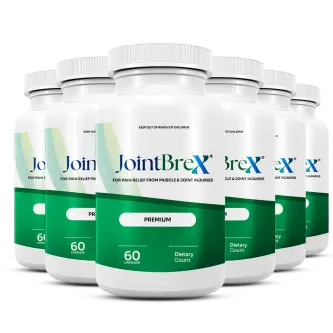
Many joint formulas don’t include collagen at all. JointBrex, for example, combines glucosamine and chondroitin with boswellia and turmeric but no collagen — see our ingredients breakdown.
Frequently asked questions
Is collagen better than glucosamine for knees?
UC-II outperformed glucosamine plus chondroitin in one trial, but the evidence is still limited. Hydrolyzed collagen hasn’t been shown to be better.
How long does collagen take to work for joints?
Most studies ran 3 to 6 months.
Does collagen rebuild cartilage?
There’s no strong evidence that oral collagen rebuilds cartilage in people with osteoarthritis.
Related: Do glucosamine and chondroitin work? · Best joint supplement ingredients after 50 · JointBrex review
Sources: NCCIH, Osteoarthritis: In Depth; NCCIH, Glucosamine and Chondroitin.
JointBrex Review 2026: Ingredients, Evidence & Who It’s Really For
Every dose checked against research, who it suits, side effects and how the 60-day refund works.
Leave a Reply