Part of our joint health series. See our main guide for an honest look at one popular joint supplement.
By the My Good Routine editorial team. Not medical advice.
Glucosamine and chondroitin are the best-selling joint supplements in the world, and you’ll find them in most drugstore joint formulas. But do they actually work? After three decades of research, the honest answer is: for most people, probably not much — though some people do report benefits. Here’s what the evidence shows and how to decide whether they’re worth trying.
What glucosamine and chondroitin are
Both are natural parts of cartilage, the smooth tissue that cushions the ends of your bones. Glucosamine is a building block of cartilage and is usually made from shellfish shells. Chondroitin helps cartilage hold water and stay elastic; it’s usually made from cow or shark cartilage. The theory is that taking them by mouth supplies raw material to slow cartilage wear.
What the big studies found
The GAIT trial
The largest independent study, the US government-funded Glucosamine/chondroitin Arthritis Intervention Trial (GAIT), followed about 1,500 people with knee osteoarthritis. Overall, glucosamine, chondroitin and the combination were not significantly better than placebo for pain relief. A smaller subgroup with moderate-to-severe pain did better on the combination, but that finding was considered preliminary.
Later reviews
Meta-analyses since then have found small or no benefits, and results vary depending on who funded the study and which form of glucosamine was used. Some European trials using a prescription-grade crystalline glucosamine sulfate showed modest benefits; most others did not.
What guidelines say
The American College of Rheumatology recommends against glucosamine for knee, hip and hand osteoarthritis, and against chondroitin for the knee and hip. Chondroitin is conditionally recommended for hand osteoarthritis.
Why some people still swear by them
- The placebo effect is strong for joint pain. In GAIT, about 60% of people on placebo reported meaningful improvement.
- Osteoarthritis pain naturally comes and goes, so a good stretch can coincide with starting a supplement.
- Individual responses vary. A small group may genuinely benefit, and the supplements are generally safe.
If you want to try them
- Use study doses: 1,500 mg glucosamine sulfate and 800–1,200 mg chondroitin a day. Many combination products contain much less.
- Give it 8–12 weeks, then stop if you notice no difference.
- Avoid glucosamine if you’re allergic to shellfish.
- Talk to your doctor if you take warfarin — both may increase its effect.
Better-supported alternatives
If you want a supplement with stronger evidence for knee pain, boswellia and curcumin (from turmeric) have more consistent results. See boswellia vs turmeric for knee pain and glucosamine vs turmeric. And the treatments with the best evidence of all aren’t supplements: regular exercise and weight management — see low-impact exercises for knee pain.
What about combination products?
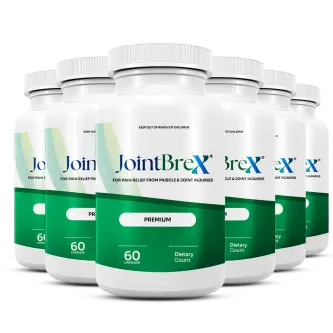
Many joint formulas mix glucosamine and chondroitin with plant extracts. If you consider one, compare each dose with the study amounts. For example, JointBrex includes 1,000 mg glucosamine and 100 mg chondroitin — below study doses — alongside boswellia and turmeric. Our JointBrex ingredients guide breaks it down.
Frequently asked questions
Does glucosamine rebuild cartilage?
There’s no strong evidence that it rebuilds cartilage in people with osteoarthritis.
How long does glucosamine take to work?
Studies typically ran 8 weeks to 2 years. If you’ve noticed nothing after 3 months, it’s unlikely to help.
Is chondroitin safe?
Generally yes, with mild digestive side effects in some people. It may interact with blood thinners.
Related: Collagen vs glucosamine · Best joint supplement ingredients after 50 · JointBrex review
Sources: NCCIH, Glucosamine and Chondroitin for Osteoarthritis; NCCIH, Osteoarthritis: In Depth.
JointBrex Review 2026: Ingredients, Evidence & Who It’s Really For
Every dose checked against research, who it suits, side effects and how the 60-day refund works.
Leave a Reply